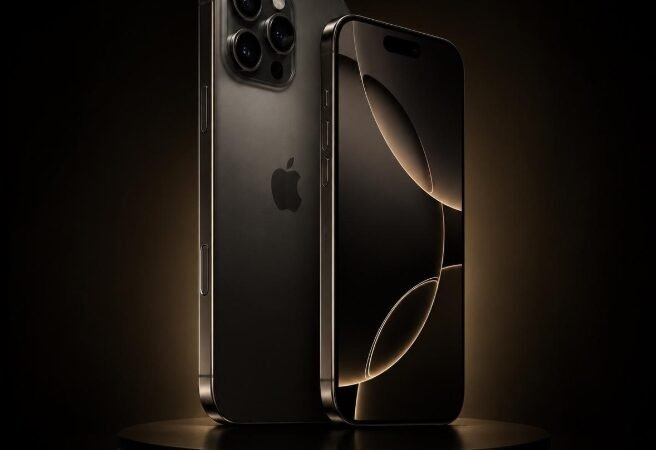
Introduction: From Smartphone to Status Symbol
What makes people pay more for an iPhone when cheaper smartphones can offer many of the same basic functions? The answer lies beyond technology.
Apple has transformed the iPhone from a communication device into a premium lifestyle product, combining design, innovation, brand identity, retail experience and an integrated digital ecosystem. As one of the world’s most recognizable technology brands, Apple has built a powerful competitive position through products such as the iPhone, iPad and Mac. The iPhone, in particular, remains the flagship product through which Apple communicates its values of innovation, quality and exclusivity.
Apple’s competitive strength can be examined through vector analysis, assessing the iPhone across key dimensions: product superiority, packaging superiority, communication superiority, price superiority, in-store presence and trial superiority.
The analysis shows that Apple’s greatest strength is not any single feature. Rather, it is the company’s ability to make multiple elements work together to create a distinctive customer experience.
1. Product Superiority: More Than a Device
Quality: Premium Design as a Competitive Advantage
Quality is one of the strongest pillars of Apple’s positioning. iPhones use premium materials such as aluminum and glass, creating a distinctive appearance and tactile experience. The attention to construction, finishing and design reinforces the perception that the iPhone is a high-quality product.
However, Apple’s perception of quality extends beyond physical materials. It is also associated with reliability, software integration and the overall consistency of the user experience.
Function: Simplicity Meets an Integrated Ecosystem
An iPhone is not simply a smartphone; it is a gateway into Apple’s wider technological ecosystem. Its compatibility with products and services such as the Mac, Apple Watch, AirPods, iCloud and Apple services creates a connected experience.
This ecosystem gives Apple an important competitive advantage because customers who own several Apple products receive greater value from remaining within the same ecosystem.
Innovation: Turning Technology into Experience
Innovation has historically been central to Apple’s identity. The company has introduced and refined technologies involving bio-metric authentication, advanced cameras, spatial computing and artificial intelligence.
The emergence of Apple Intelligence further demonstrates Apple’s attempt to integrate AI into everyday user experiences rather than presenting artificial intelligence merely as a technical feature. Innovation therefore becomes meaningful when customers can see how technology improves their daily activities.
User Satisfaction: Creating Loyalty, Not Just Satisfaction
Apple also benefits from strong customer satisfaction and loyalty. A Statista survey reported that 92% of surveyed iPhone users in the United States were satisfied with Apple (Statista, 2022).
The deeper competitive advantage, however, is customer retention. A satisfied customer may buy a product again; a loyal customer is more likely to remain within the brand ecosystem.
Vector verdict: Very strong.
Apple’s combination of quality, functionality, innovation and ecosystem integration creates substantial product superiority.
2. Packaging Superiority: The First Five Seconds of the Apple Experience
The iPhone experience begins before the device is switched on.
Differentiation Through Minimalism
Apple’s minimalist packaging is instantly recognizable. Its restrained use of design, typography and imagery reflects the wider Apple brand philosophy.
Instead of overwhelming customers with information, the packaging communicates simplicity and premium positioning.
Design: Making Unboxing Part of the Product
The unboxing experience has become an important component of Apple’s brand identity. Carefully arranged components, clean typography and minimal visual clutter make opening an iPhone feel like an event rather than simply opening a box.
This experience has additional marketing value because customers frequently share unboxing experiences on social media, effectively turning consumers into informal brand promoters.
Sustainability: Progress with a Communication Challenge
Apple has made substantial investments in environmental initiatives, including greater use of recycled materials and reductions in plastic packaging.
Yet there is an important strategic issue: doing something sustainably is not the same as communicating sustainability effectively.
If customers do not understand the environmental value of Apple’s packaging and manufacturing decisions, sustainability may have limited impact on brand preference.
Vector verdict: Strong.
Apple’s packaging successfully reinforces premium positioning, although its sustainability story could be communicated more powerfully.
3. Communication Superiority: When Advertising Becomes Culture
Apple does not simply advertise products. It sells a particular vision of what customers can create, experience and become with its technology.
Advertising: Selling Emotion, Not Specifications
Apple’s advertising is often built around emotional branding, simplicity and differentiation. Rather than focusing exclusively on technical specifications, campaigns frequently demonstrate what the technology allows ordinary people to achieve.
This shifts the communication from:
“Look at what the iPhone can do”
to:
“Look at what you can do with the iPhone.”
That distinction is strategically important because it connects technology with human aspirations.
Messaging: Simplicity Creates Memorability
Apple’s communication is typically concise and carefully constructed. Its historic philosophy of “Think Different” illustrates how a short message can become closely associated with an entire brand identity.
The message communicates creativity, individuality and innovation without requiring a lengthy explanation.
Storytelling: Turning Features into Narratives
Storytelling is another important element of Apple’s communication strategy. Instead of presenting technology as a collection of specifications, Apple can demonstrate its relevance through real-world situations.
The customer becomes the protagonist, while the iPhone becomes the tool that enables the story.
This approach makes complicated technologies easier to understand and more emotionally engaging.
Digital Presence: Extending the Brand Beyond the Store
Apple maintains a substantial digital presence through platforms such as YouTube and Instagram, while Apple.com acts as a central destination for product information, purchasing and customer support.
Consequently, communication continues across the entire customer journey—from discovering the product to researching it, purchasing it and receiving support.
Vector verdict: Exceptional.
Communication is arguably one of Apple’s strongest competitive vectors because it combines product demonstration with emotional storytelling and brand mythology.
4. Price Superiority: Why Does Apple Charge More?
Price is perhaps the most controversial element of Apple’s strategy.
Premium Pricing: Turning Price into a Signal
Apple deliberately positions the iPhone at the premium end of the smartphone market. Rather than competing primarily through affordability, Apple uses premium pricing to reinforce perceptions of quality, exclusivity and technological sophistication.
In this sense, price performs two functions.
It generates revenue and communicates positioning.
A high price can become part of the product’s psychological appeal, particularly among consumers who associate premium pricing with superior quality or status.
Value for Money: The Real Question
However, premium pricing creates a challenge.
The question is not simply whether an iPhone is expensive. The question is whether customers believe that the additional price is justified.
Apple attempts to establish this justification through its combination of hardware, software, security, ecosystem integration, design, customer service and brand reputation.
Nevertheless, the high price can make the iPhone inaccessible to price-sensitive consumers, particularly in emerging markets.
Vector verdict: Strong but vulnerable.
Premium pricing supports Apple’s brand equity but limits market accessibility.
5. In-Store Presence: Retail as Theatre
Apple’s retail stores are more than places where customers purchase products.
They function as brand experience centres.
Offline Presence: Experience Before Purchase
Apple has established hundreds of retail stores globally, many of which feature minimalist architecture and open product displays.
Customers can physically interact with iPhones, Macs, iPads and other products before making a purchase. Staff can also demonstrate functionality and provide technical assistance.
This reduces the psychological distance between the consumer and the technology.
Instead of simply reading about a product, customers can touch it, test it and experience it.
Online Presence: A Digital Extension of the Store
Apple.com provides another controlled brand environment. Customers can compare products, explore specifications, purchase devices and access support.
This integration between physical and digital retail reinforces Apple’s consistent brand experience.
Brand Visibility: Beyond Apple’s Own Stores
Apple also benefits from partnerships with authorised retailers and online channels. This expands product visibility while allowing the company to maintain a premium positioning.
Vector verdict: Very strong.
Apple’s retail strategy converts a conventional purchase into an experiential journey.
6. Trial Superiority: Let the Product Sell Itself
One of Apple’s most effective strategies is allowing customers to experience its products before committing to purchase.
Physical Trial
In Apple Stores, customers can interact directly with products. They can test cameras, displays, software features and ecosystem connections.
This is particularly valuable for premium products because customers are being asked to make a substantial financial commitment.
The more effectively Apple allows customers to experience the product, the easier it becomes to justify that commitment.
Service Trials
Apple also uses trials and introductory offers across services such as Apple Music, iCloud and Apple Fitness+ to encourage customers to enter its wider ecosystem.
This creates a powerful strategic cycle:
Trial → Experience → Adoption → Ecosystem Integration → Loyalty
The customer may initially purchase an iPhone, but the relationship can subsequently expand into multiple Apple products and services.
Vector verdict: Very strong.
Trial reduces purchase uncertainty while simultaneously encouraging deeper ecosystem engagement.
7. The Apple Advantage: Six Vectors, One Powerful Ecosystem
The individual vectors become significantly more powerful when combined.
| Vector | Apple’s Strength | Strategic Impact |
| Product superiority | Quality, innovation and ecosystem | Builds preference |
| Packaging superiority | Minimalism and premium presentation | Reinforces brand perception |
| Communication superiority | Storytelling and emotional branding | Creates desire |
| Price superiority | Premium pricing | Signals exclusivity and value |
| In-store presence | Experiential retail | Builds trust and engagement |
| Trial superiority | Product and service trials | Reduces purchase risk |
The real strength of Apple therefore lies in integration.
A customer sees the iPhone in an advertisement, encounters it online, visits an Apple Store, tests the device, experiences the packaging, purchases it at a premium price and then becomes connected to Apple’s broader ecosystem.
Every stage reinforces the next.
This is what makes Apple’s competitive advantage difficult for competitors to replicate.
8. Recommendations: Where Can Apple Go Further?
Despite its strong performance, the vector analysis identifies two areas where Apple could improve.
1. Develop Greater Price Accessibility
Apple’s premium positioning is one of its greatest strengths, but it can also be a barrier.
Rather than significantly reducing the price of flagship iPhones, Apple could strengthen its mid-range accessibility through carefully designed models, financing options, trade-in programmes and region-specific strategies.
The objective should not be to make Apple a low-cost brand.
It should be to make Apple’s ecosystem accessible to a larger proportion of consumers without damaging its premium image.
2. Make Sustainability More Visible
Apple has made considerable progress in areas such as recycled materials, renewable energy and environmental initiatives. However, sustainability can become a stronger component of customer value if it is communicated more clearly.
Apple could make sustainability information easier for consumers to understand through packaging, product pages and in-store communication.
The challenge is to transform:
“Apple is becoming more sustainable”
into:
“I can see and understand the sustainable value of the product I am buying.”
This would allow sustainability to become not only an operational objective but also a source of brand differentiation.
Conclusion: Apple Does Not Sell an iPhone—It Sells an Experience
Apple’s iPhone demonstrates how a product can achieve competitive superiority by combining multiple dimensions of value.
Its product quality creates trust.
Its packaging creates anticipation.
Its advertising creates desire.
Its premium price creates exclusivity.
Its stores create experience.
Its trials reduce uncertainty.
And its ecosystem creates loyalty.
The most important insight from the vector analysis is therefore that Apple’s competitive advantage does not come from one extraordinary feature.
It comes from the way every customer touchpoint reinforces the same message:
premium technology, simplicity, innovation and identity.
This integrated approach has helped Apple transform the iPhone from a smartphone into a global lifestyle brand.
Yet the next challenge is equally clear. Apple must preserve its premium identity while becoming more accessible and making its sustainability achievements more visible to consumers.
If Apple can successfully balance exclusivity with accessibility and innovation with sustainability, its strongest competitive vector may not be the iPhone itself—but the ecosystem and experience surrounding it.
Team CiteAndWrite, 2026
References
Business Insider, 2025. The success of the iPhone 17 has Apple set to take over a title it hasn’t held for over a decade: https://www.businessinsider.com/apple-beats-samsung-iphone-17-success-smartphone-manufatcuring-market-2025-11
HEC Montreal, 2024. Storytelling in Advertising – Apple Sells Emotions: https://digital.hec.ca/en/blog/storytelling-in-advertising-apple-sells-emotions/
RankRed, 2025. Apple – statistics & facts: https://www.rankred.com/apple-marketing-strategy/
Rauf, F. 2024. The Psychology Behind Apple’s Packaging, Dream Custom Boxes: https://www.dreamcustomboxes.com/apple-packaging/?srsltid=AfmBOoq1jCDFpo_Lp_qJs1sa0WlNg1mRsWXKUFRnktKnq-Dnj44BO7NI
Statista, 2022. How Happy And Loyal Are U.S. Smartphone Users?: https://www.statista.com/chart/27694/satisfaction-and-brand-loyalty-among-us-smartphone-users/?srsltid=AfmBOoprbfTu-SBzlo4uCpzPa5QoPFiDucfp2lDdkUNvUtFv8ExcFgum
Statista, 2025. Apple – statistics & facts: https://www.statista.com/topics/847/apple/?srsltid=AfmBOorc2iopGw1Sc0oUM_x1scrVkSfoA1adaiOcUpi0WUf3M2wEgDj_#topicOverview
Bajarin, T. 2025. Apple’s AI Approach: Innovation, Criticism, And The Road Ahead, Forbes: https://www.forbes.com/sites/timbajarin/2025/06/19/apples-ai-approach-innovation-criticism-and-the-road-ahead/