Sustainable development can be defined as societal progress that meets the needs of the present without compromising the ability of future generations to meet their own needs (Damtoft et al., 2008). This principle lies at the heart of the United Nations’ 2030 Agenda for Sustainable Development, which identifies climate action as one of its 17 Sustainable Development Goals (SDGs). However, Climate Change is not an isolated development challenge. It has a multiplier effect, intensifying problems such as poverty, food insecurity, poor health, inequality, and economic vulnerability.
For Africa, the relationship between climate change and sustainable development is particularly significant. The continent continues to face major socioeconomic and environmental challenges while having contributed relatively little to historical global greenhouse gas emissions. Climate-related disasters, changing rainfall patterns, rising temperatures, flooding, drought, and other environmental pressures are therefore creating serious obstacles to Africa’s efforts to achieve the SDGs.
Climate Change as a Barrier to Sustainable Development
The United Nations’ sustainable development framework recognizes that progress across the SDGs is interconnected. Climate change can undermine progress in poverty reduction, food security, health, education, clean water, energy access, and economic development. Consequently, achieving the SDGs requires climate action to be integrated into broader development strategies.
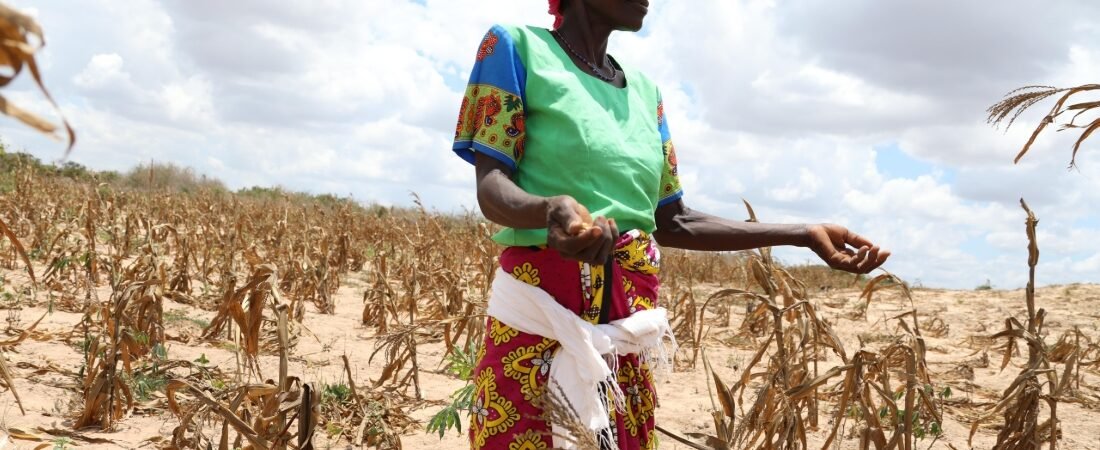
Climate change is directly connected to food insecurity and economic inequality. Changes in temperature and precipitation can reduce agricultural productivity, particularly in regions where communities depend heavily on rain-fed agriculture. When agricultural production declines, rural households may experience falling incomes, food shortages, displacement, and increased poverty.
These risks are particularly serious in Africa because agriculture remains an important source of livelihoods across much of the continent. Climate variability can therefore affect not only food availability but also household incomes, employment, economic growth, and social stability.
Africa’s Sustainable Development Challenges
Africa faces significant difficulties in achieving sustainable development. Many African countries continue to lag behind other regions on indicators including poverty reduction, nutrition, education, electricity access, clean drinking water, and climate action (Begashaw, 2019).
The concentration of poverty in Africa further increases the continent’s vulnerability to climate change. Communities living with limited access to financial resources, healthcare, infrastructure, insurance, and social protection often have fewer options for responding to climate-related shocks.
This creates a damaging cycle. Poverty can limit a community’s ability to adapt to climate change, while climate-related disasters can deepen poverty by destroying crops, homes, infrastructure, and livelihoods.
Why Africa Is Highly Vulnerable to Climate Change
Richard Washington argues that Africa is particularly vulnerable to climate change because of its strong dependence on rainfall for food production. Much of the continent’s agricultural system remains highly sensitive to variations in precipitation and temperature.
Africa’s vulnerability is also influenced by large-scale climate and weather systems. Changes occurring beyond the continent can affect African weather patterns, demonstrating that climate change is a global problem whose consequences do not remain within national borders.
Rising temperatures are another major concern. Some areas of southern Africa, including Botswana, Zambia, and Namibia, are projected to experience substantial increases in average temperatures. High baseline temperatures can make additional warming particularly damaging because communities, ecosystems, and agricultural systems already operate under considerable heat stress.
The challenge is compounded by limited institutional and financial capacity. Many African governments face shortages of resources, technology, infrastructure, and technical expertise required to implement large-scale climate adaptation and mitigation programmes (BBC News, 2019a).
Africa’s Low Contribution to Global Emissions
One of the central issues in the debate over climate change and Africa is the disparity between contribution and vulnerability.
Africa has historically contributed a relatively small share of global greenhouse gas emissions, yet the continent is experiencing substantial climate-related impacts. These include flooding in parts of West Africa, changing rainfall patterns in Southern Africa, drought, and locust invasions in East Africa (Addaney, 2021).
This disparity raises important questions about climate justice. Countries and communities that have contributed relatively little to cumulative greenhouse gas emissions can nevertheless face severe consequences from a changing global climate.
Climate change therefore cannot be considered solely an environmental issue. It is also an issue of economic development, international cooperation, equity, and global responsibility.
Global Inequality and Resource Consumption
The challenge of sustainable development is also linked to historical inequalities in resource consumption. Wealthier countries have generally benefited from decades of industrialization and high levels of energy and resource consumption, while many developing countries continue to struggle to provide basic services to their populations.
The unequal distribution of resources creates a difficult dilemma. Developing countries need economic growth to reduce poverty and improve living standards, but conventional development models can increase energy consumption and greenhouse gas emissions.
Sustainable development therefore requires a transition toward economic growth that is less dependent on carbon-intensive activities. For developing countries, this transition must also ensure access to affordable energy, employment, infrastructure, education, and healthcare.
The United States, China, and Global Climate Responsibility
The actions of major economies are particularly important because they account for a substantial share of global greenhouse gas emissions. According to estimates cited in the provided literature, China and the United States accounted for approximately 27% and 11% of global greenhouse gas emissions respectively in 2019, while India accounted for approximately 6.6%.
These figures demonstrate why international climate cooperation is essential. Climate change cannot be effectively addressed through the actions of African countries alone.
The historical development of industrialized economies has contributed substantially to the accumulation of greenhouse gases in the atmosphere. At the same time, rapidly developing economies face the challenge of expanding their economies while attempting to reduce the carbon intensity of development.
This creates tensions between economic development and environmental sustainability. International negotiations therefore need to address both emissions reductions and the development needs of poorer countries.
The Paris Agreement and National Climate Commitments
International cooperation is reflected in the Paris Agreement, under which countries committed to nationally determined contributions (NDCs) aimed at limiting global warming to well below 2°C above pre-industrial levels while pursuing efforts to limit warming to 1.5°C.
However, national commitments and their implementation remain crucial. Climate Action Tracker assessments cited in the source material have characterized the climate commitments of major economies as insufficient relative to the level of emissions reductions required.
The gap between international climate objectives and actual national policies represents one of the major challenges facing sustainable development. Without stronger mitigation efforts by major emitters, developing countries—including African nations—may face increasingly severe climate impacts regardless of their own emissions levels.
China, Fossil Fuels, and Africa
China occupies a particularly important position in the global climate debate. The country has become the world’s largest emitter of greenhouse gases and has historically been heavily dependent on coal for energy.
China’s overseas investment has also generated debate about the future of energy infrastructure in developing countries. The Belt and Road Initiative (BRI), for example, has included major infrastructure investments across Asia, Africa, and other regions. Concerns have been raised about fossil-fuel-based projects and their implications for long-term climate objectives (Maizland, 2021).
At the same time, China’s role cannot be understood solely through fossil-fuel investment. The country has also become a major participant in renewable energy and clean-technology industries. This makes its future energy and investment choices particularly consequential for the global transition toward sustainable development.
Climate Change and Climate Justice in Africa
The African climate challenge highlights a broader question of climate justice: how should the costs of climate change be distributed among countries with very different historical contributions to global emissions and very different capacities to respond?
For African countries, adaptation is particularly important. Adaptation measures can include climate-resilient agriculture, improved water management, early-warning systems, resilient infrastructure, disaster preparedness, ecosystem restoration, and stronger healthcare systems.
However, adaptation requires substantial financial and technical resources. International climate finance can therefore play an important role in helping vulnerable countries respond to climate impacts while continuing their development.
The Need for Global Cooperation
Africa cannot address climate change independently. Although African governments have an important responsibility to strengthen institutions, improve environmental governance, and invest in climate resilience, global cooperation is equally necessary.
Developed and high-emitting economies have a significant role in reducing global emissions, supporting technological transfer, increasing climate finance, and promoting sustainable investment in developing countries.
At the same time, African countries can pursue development pathways that expand renewable energy, improve agricultural resilience, protect ecosystems, and strengthen sustainable urbanization. Africa has considerable renewable-energy potential, including solar, wind, hydroelectric, and geothermal resources, which could contribute to both economic development and emissions reduction.
Conclusion
Climate change and sustainable development in Africa are inseparable challenges. Climate change threatens food security, livelihoods, public health, infrastructure, and economic development, while poverty and limited institutional capacity reduce the ability of vulnerable communities to adapt.
The situation also demonstrates the unequal nature of the global climate challenge. Africa has contributed relatively little to global greenhouse gas emissions but faces significant environmental and socioeconomic consequences. Meanwhile, major economies continue to have a disproportionate influence on the trajectory of global emissions.
Achieving sustainable development will therefore require more than individual national efforts. It will depend on coordinated international action that combines emissions reduction with climate adaptation, financial support, technological cooperation, and sustainable economic development. The success of the 2030 Agenda ultimately depends on whether the international community can reconcile economic development with environmental protection and ensure that vulnerable regions such as Africa are not left to bear a disproportionate share of the consequences of global climate change.
Team Cite&Write