Latest posts
-
AI and Information Management: Transforming Data into Strategic Business Intelligence
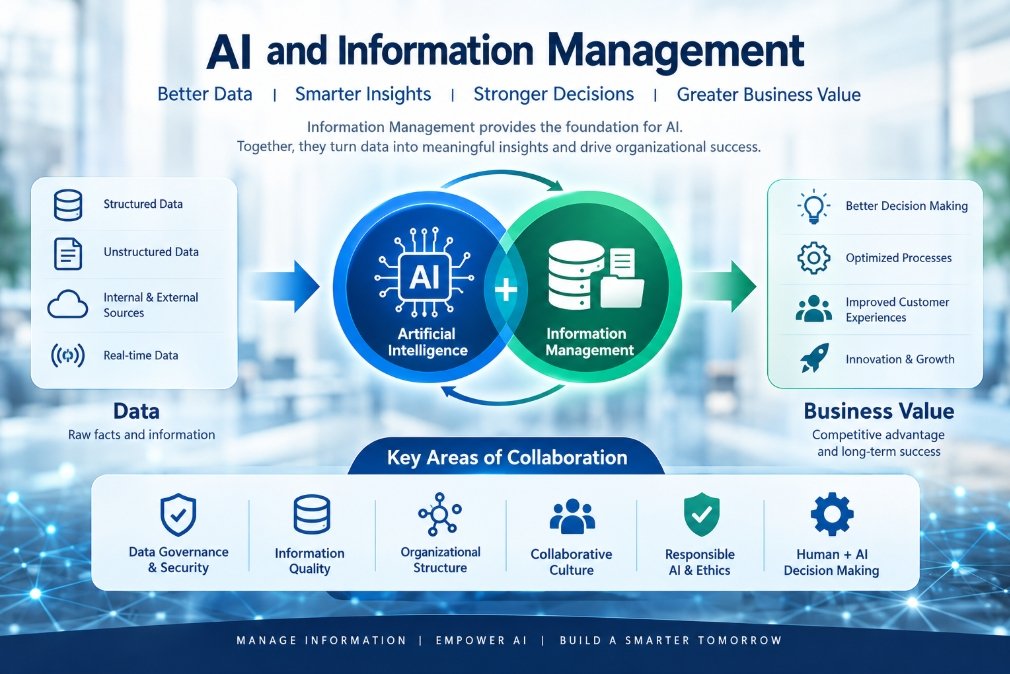
Artificial intelligence (AI) is rapidly transforming how organizations collect, manage, analyze, and use information. From customer segmentation and predictive analytics to automated service operations and AI-powered product development, organizations are increasingly integrating AI into core business functions. However, the effectiveness of AI does not depend on algorithms alone. High-quality information management (IM) is a fundamental…
-
Building Resilient Agricultural Livelihoods in South Sudan: Addressing Poverty, Food Insecurity and Climate Vulnerability

South Sudan faces a severe and multidimensional development crisis in which poverty, food insecurity, conflict, displacement, weak infrastructure and climate vulnerability reinforce one another. Despite its substantial agricultural potential, the country remains heavily dependent on humanitarian assistance, while a large share of its population struggles to secure adequate food and sustainable livelihoods. Women and children…
-
Entrepreneurial Opportunity Recognition: From Idea Generation to Venture Creation
Entrepreneurial Opportunity Recognition be regarded as a core construct in the entrepreneurship discipline. Shane and Venkataraman (2000) argue that a better understanding of entrepreneurship requires attention to both individuals and the opportunities they identify, evaluate, and exploit. Their perspective shifted attention away from viewing entrepreneurship simply as the creation of new firms and toward understanding…
-
PESTEL Analysis of the Global Fashion Industry
The global fashion industry operates within a highly interconnected macro-environment in which geopolitical instability, economic uncertainty, changing consumer preferences, technological innovation, environmental pressures and increasingly stringent regulation are reshaping how fashion companies design, source, manufacture and sell products. In 2026, these forces are particularly significant because fashion supply chains remain globally dispersed while consumers are…
-
Intercultural Competence in Global Business: Understanding Cross-Cultural Theories and Managerial Effectiveness
Introduction In today’s increasingly globalised business environment, Intercultural Competence has become an important managerial competence for organisations operating across national, cultural and linguistic boundaries. Global businesses bring together employees, managers, customers, suppliers and business partners who may have different assumptions about authority, communication, teamwork, time, relationships, negotiation and decision-making. Consequently, managers need more than technical…
-
Motivations of Entrepreneurship: Key Factors That Drive Entrepreneurial Success
Entrepreneurship plays an important role in economic development, innovation, employment creation, and the utilization of market opportunities. At its core, entrepreneurship involves organizing a firm by coordinating and assembling resources to identify and exploit market opportunities (Alvarez & Barney, 2004; Peteraf & Barney, 2003, cited in Alvarez & Barney, 2005). However, individuals do not enter…
-
Emotional Intelligence and Leadership Effectiveness: Understanding How EI Shapes Effective Leadership
Emotional intelligence (EI) has emerged as an influential concept in the study of human behaviour, interpersonal relationships, and leadership. While traditional perspectives on intelligence have largely emphasized cognitive abilities, emotional intelligence draws attention to another dimension of human functioning: the capacity to perceive, understand, regulate, and use emotions effectively. This perspective is particularly relevant to…
-
Dior’s Marketing Communication Strategy: The 7Ps Framework

Dior has established a distinctive marketing communication strategy that combines heritage, exclusivity, craftsmanship and contemporary digital engagement. Dior’s Marketing approach can be examined through the 7Ps framework: Product, Price, Place, Promotion, People, Process and Physical Evidence. Together, these elements contribute to Dior’s luxury positioning and shape consumer’s perceptions of the brand. Product Dior’s product portfolio…
-
Circular Fashion Revolution: How The Circular Fashion (TCF) Turns Sustainability Challenges into Business Opportunities

The fashion industry faces enormous sustainability challenges, from massive greenhouse gas emissions and overflowing landfills to unethical supply chains and climate impacts. Fast fashion’s linear “take-make-dispose” model has accelerated these problems, but a circular economy approach offers a powerful alternative. The Circular Fashion (TCF) proposes a strategic venture that converts these challenges into opportunities by…
-
RBV, VRIO and Core Competencies: The Case of Samsung
Introduction The Resource-Based View (RBV) argues that sustainable competitive advantage originates from a firm’s internal resources and capabilities, particularly those that are valuable and difficult for competitors to imitate (Barney, 1991; Conner, 1991, cited in Raduan et al., 2009). Resources encompass not only physical and financial assets but also knowledge, technology, organisational processes, managerial expertise…